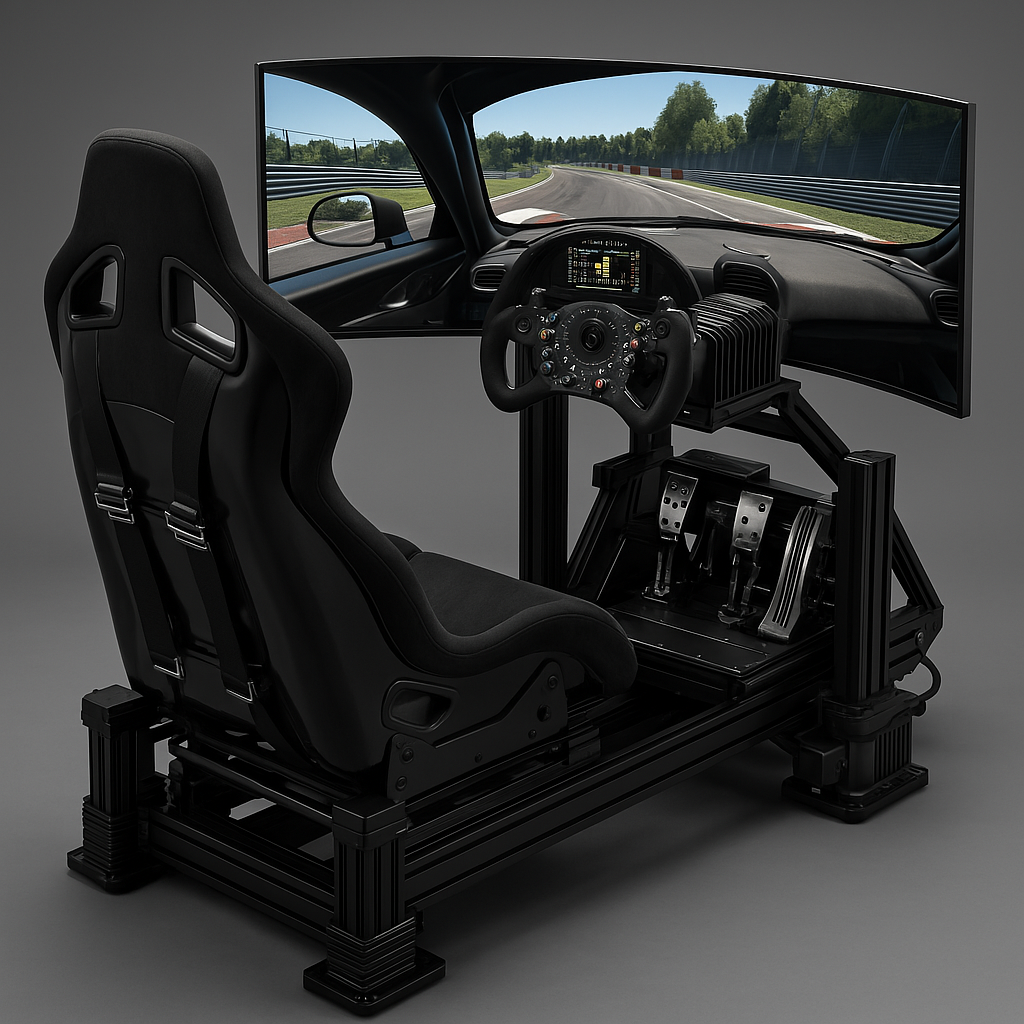
Experience Immersion: Top Sim Racing Rigs Explored
For enthusiasts yearning to blur the lines between virtual and reality, a high end sim racing rig isn't just a collection of peripherals; it's a meticulously crafted portal to an unparalleled world of motorsport. Gone are the days of toy-like wheels clamped to desks. Today's sim racers demand an experience that faithfully replicates the nuances, G-forces, and raw excitement of driving a real race car. This deep dive explores what constitutes a top-tier sim racing setup, why the investment is worthwhile, and how to navigate the exciting journey of building your dream rig.
Whether you're an aspiring professional esports driver, a dedicated track day enthusiast looking to hone your skills off-season, or simply someone who craves the ultimate immersive gaming experience, understanding the components that define a Ultimate Guide to High-End Sim Racing Rigs is your first lap towards victory. These aren't mere upgrades; they are foundational elements designed for precision, durability, and a level of feedback that brings the digital tarmac directly to your fingertips and feet.
The Core Pillars of a High-End Sim Racing Rig
At the heart of any exceptional sim racing setup lies a commitment to realism and robust engineering. The primary components chosen for a high end sim racing rig are not just powerful, but also designed to work in harmony, delivering a cohesive and believable driving experience.
- Direct Drive Wheelbases: Unrivaled Force Feedback
The gold standard for force feedback, direct drive wheelbases represent the pinnacle of steering precision and immersion. Unlike gear or belt-driven wheels, direct drive systems connect the motor shaft directly to the wheel rim, eliminating mechanical play and delivering pure, unfiltered force feedback. This means you feel every curb, every tire slip, every weight transfer with incredible fidelity and speed. The range of torque offered by these systems can be substantial, often mirroring the physical effort required in a real race car, allowing for minute adjustments and a deeper connection to the car's behavior. Brands like Fanatec, Simucube, and VRS Technologies dominate this space, offering various torque levels and ecosystems. - Load Cell & Hydraulic Pedals: Precision Under Pressure
Beyond just accelerating and braking, high-end pedals are about feel and consistency. Load cell pedals measure the pressure applied rather than just the distance moved, offering a much more accurate and repeatable braking experience, crucial for trail braking and lap consistency. Hydraulic pedal sets take this realism even further, mimicking the feel and progression of a real car's hydraulic brake system. This allows drivers to modulate brake pressure with surgical precision, preventing lock-ups and maximizing corner entry speed. Investing in pedals with strong, adjustable resistance and durable construction is paramount for any serious sim racer. - Rigid Chassis & Cockpits: The Foundation of Stability
What good are powerful wheelbases and pedals if your setup flexes under pressure? A high-end sim racing rig requires an equally robust chassis or cockpit. Typically constructed from aluminum profiles (80/20 extrusions), steel tubing, or even carbon fiber, these structures are designed for zero flex. They provide an unyielding platform for mounting all your expensive gear, ensuring that all force feedback and pedal input translates directly to the driver, not into chassis wobble. Adjustability is key, allowing you to fine-tune the seating position, pedal distance, and screen placement for optimal ergonomics and comfort, which is vital for long racing stints. - Immersive Displays: Triple Screens, Ultrawide, or Virtual Reality
Visual immersion is critical. While a single ultrawide monitor can offer a good field of view, triple monitor setups (often 27-32 inches) are the choice for many competitive racers, providing a near 180-degree peripheral vision that significantly enhances situational awareness and depth perception. For the ultimate dive into the virtual world, virtual reality (VR) headsets like the Varjo Aero or HP Reverb G2 offer an unparalleled sense of presence, placing you directly inside the cockpit. Each option presents its own benefits and challenges, but all aim to make the digital environment feel as real as possible.
Elevating Immersion: Beyond the Essentials
Once the core components of your high end sim racing rig are established, the next step is to introduce peripherals and technologies that push the boundaries of sensory immersion, transforming a great setup into an extraordinary one.
- Motion Platforms: Feeling the G-Forces
Perhaps the most impactful addition for ultimate immersion, motion platforms physically move the driver to simulate the forces experienced in a real car. From subtle bumps and road texture to dramatic pitch, roll, and heave from acceleration and braking, these platforms provide crucial haptic feedback. Systems range from entry-level seat shakers to advanced 3-DOF (degrees of freedom) or even 6-DOF platforms that can replicate almost every movement of a vehicle. While a significant investment, a motion platform undeniably enhances the realism and helps drivers anticipate car behavior. - Tactile Feedback Systems (Buttkickers, Bass Shakers): The Rumble Strip Effect
Working in conjunction with or as an alternative to full motion, tactile transducers (often called Buttkickers or bass shakers) attach to the chassis or seat and convert low-frequency audio signals into vibrations. This allows you to feel engine vibrations, gear shifts, road surface changes, and even tire slip through your body, adding another layer of sensory input that can greatly improve your car control and awareness. - High-Fidelity Peripherals: Shifters, Handbrakes, and Button Boxes
The tactile experience extends to secondary controls. A solid, sequential shifter or an H-pattern shifter with satisfying mechanical feedback adds to the realism, particularly for cars that demand manual gear changes. Hydraulic handbrakes offer precision for rally or drift enthusiasts. Custom button boxes and Stream Decks allow for quick access to pit strategies, brake bias adjustments, or DRS activation without needing to reach for a keyboard, keeping your hands on the wheel and your eyes on the track. - Ergonomics and Seating: Comfort is King
Even the best equipment won't shine if you're uncomfortable. A proper racing seat (often a real bucket seat or a GT-style seat) provides the necessary support and comfort for extended sessions. Adjustability of the seat, wheel, and pedals within the cockpit is crucial to find your perfect driving position, minimizing fatigue and maximizing focus. This ergonomic setup is often overlooked but plays a vital role in sustained performance and enjoyment.
Investing Wisely: Budgeting and Future-Proofing Your Dream Rig
Building a high end sim racing rig is a journey, often starting with core components and gradually expanding. Even within the "high-end" category, there are tiers of performance and price. Strategic planning ensures your investment is sound and your rig can evolve with your passion.
- Component Synergy and Compatibility: Do Your Homework
Research is critical. Ensure that your chosen wheelbase is compatible with your desired pedals and that your chassis can securely mount everything. Consider ecosystems (e.g., Fanatec's integrated solutions) versus mixing and matching components from different manufacturers, which might require adapters but often offers more flexibility. Pay attention to reviews, forums, and community recommendations to understand real-world performance and reliability. - Scalability and Upgrade Paths: Think Long-Term
A truly high-end setup is built with future upgrades in mind. An aluminum profile chassis, for example, allows for easy addition of monitor mounts, shifter arms, or even motion actuators later on. Investing in a powerful PC from the outset is also crucial, especially if you plan to run triple monitors, VR, or demanding simulations at high frame rates. A robust PC ensures your graphics and physics calculations keep pace with your top-tier peripherals. - Space and Power Requirements: The Practical Considerations
These elaborate setups demand significant space. Measure your intended area carefully and consider the footprint of a full cockpit with triple monitors or a motion platform. Furthermore, powerful direct drive wheels and motion systems can draw substantial power, so ensure your electrical outlets can handle the load without tripping breakers. Proper cable management is also essential for safety and aesthetics. - Patience and Phased Investment: Building Over Time
You don't have to acquire every top-tier component at once. Many enthusiasts build their ultimate rig in phases, starting with a strong wheelbase, pedals, and a rigid chassis, then gradually adding motion, advanced displays, and secondary peripherals. This allows for a more manageable financial outlay and the opportunity to truly appreciate each upgrade's impact. For detailed steps on assembling your setup, refer to our guide on Building Your Dream High-End Sim Racing Setup.
Conclusion
The pursuit of a high end sim racing rig is more than just buying expensive gear; it's about crafting an immersive experience that challenges, thrills, and educates. It's an investment in a hobby that demands skill, precision, and dedication, mirroring the demands of real-world motorsport. By carefully selecting top-tier components like direct drive wheelbases, load cell pedals, rigid cockpits, and embracing advanced immersion technologies, you can unlock a level of realism that transforms gaming into genuine simulated racing. Prepare to be fully immersed, to feel every sensation, and to push your limits on the virtual track like never before. The pinnacle of virtual motorsport awaits.