Ultimate Guide to High-End Sim Racing Rigs
For the ardent motorsport enthusiast, the desire to experience the thrill of the track without leaving home is a powerful one. While entry-level setups offer a taste, true immersion and competitive edge come from investing in a high end sim racing rig. These aren't mere toys; they are sophisticated, meticulously engineered systems designed to replicate the nuances of real-world racing with breathtaking fidelity. This ultimate guide will delve into the essential components, advanced technologies, and considerations that define a premium sim racing experience, transforming your living space into a virtual cockpit.
The Pillars of a High-End Sim Racing Rig: Uncompromised Performance
At the heart of any top-tier sim racing setup lies a commitment to performance and realism. Every component is chosen to minimize compromise and maximize the sensation of being in a race car.
Direct Drive Wheel Bases: Unrivaled Force Feedback
The steering wheel is your primary interface with the virtual world, and in a high end sim racing rig, this means a direct drive wheel base. Unlike gear or belt-driven systems that introduce slack and dampen feedback, direct drive motors connect the steering wheel shaft directly to a powerful electric motor. This delivers unparalleled:
- Fidelity: Every subtle bump, tire slip, and track texture is transmitted with crystal-clear precision.
- Torque: High-end direct drive wheels can produce significant torque (up to 20-30+ Nm), accurately mimicking the heavy steering forces of a real race car, especially GT3 or F1 machines.
- Responsiveness: Instantaneous feedback allows for quicker reactions and a deeper understanding of the car's behavior.
Brands like Simucube, VRS, and high-end Fanatec models dominate this segment, offering robust construction and sophisticated software for fine-tuning the force feedback to your preference and the specific simulator.
Load Cell Pedals: Precision Braking for the Win
While an excellent wheel is crucial, elite sim racers often assert that the pedals are even more vital for consistency and lap times. High-end setups exclusively feature load cell pedals, particularly for the brake:
- Pressure-Based Braking: Unlike potentiometer-based pedals that measure displacement (how far you push), load cell pedals measure the force applied. This allows you to build muscle memory for braking, just like in a real car.
- Consistency: Repeatedly applying the same braking force becomes intuitive, leading to consistent braking points and reduced lock-ups.
- Adjustability: Premium pedal sets offer extensive adjustability for spring stiffness, pedal travel, and even pedal face angle, allowing you to tailor them to your driving style and car.
Paired with a high-quality throttle and clutch (often hydraulic or featuring robust hall-effect sensors), these pedal sets provide the control needed to extract every tenth of a second.
Robust Cockpits & Sim Racing Seats: Foundation for Immersion
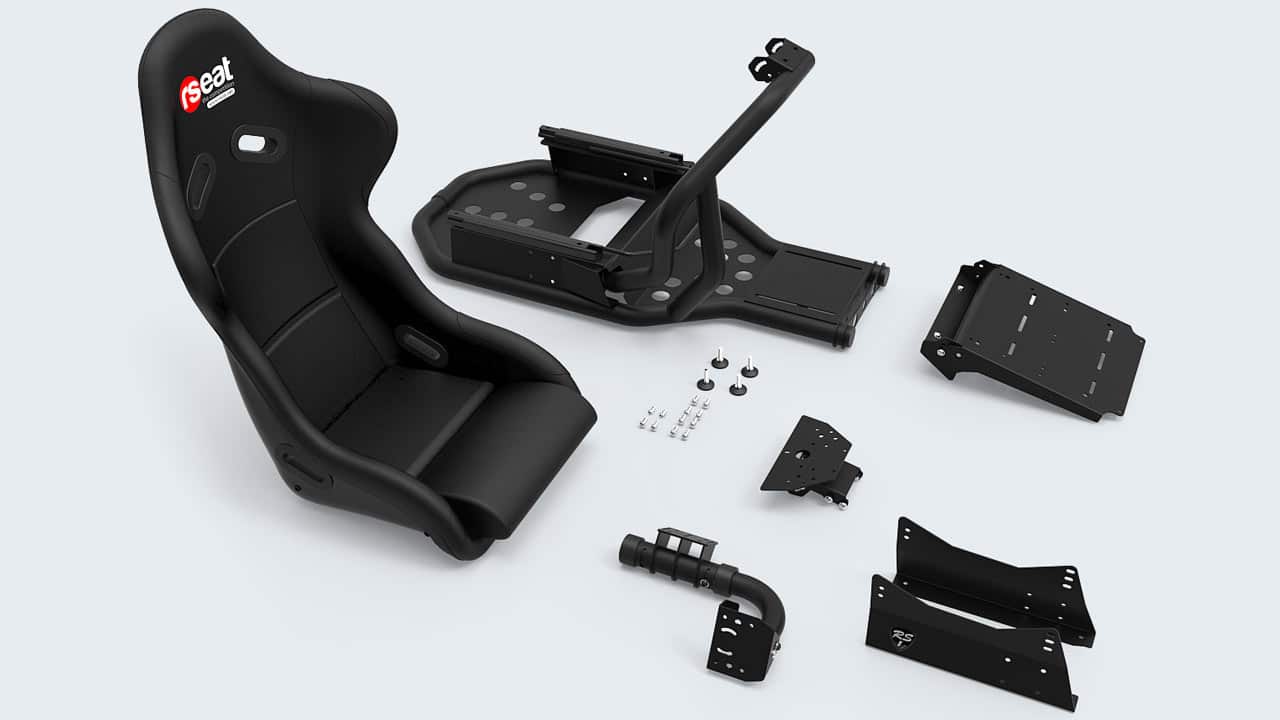
A powerful wheel and pedals are only as good as the platform they're mounted on. A true high end sim racing rig demands a rock-solid cockpit, typically constructed from aluminum extrusion (80/20 profiles):
- Rigidity: Prevents flex, wobbling, or movement even under heavy direct drive force feedback and strong braking inputs. This ensures all feedback is transmitted directly to the driver, not lost in chassis movement.
- Adjustability: Aluminum profiles offer virtually infinite adjustability for wheel height, pedal distance, seat position, and monitor placement, accommodating drivers of all sizes and preferences.
- Modular Design: Easily allows for future upgrades like shifters, button boxes, or even motion platforms without compromising stability.
Complementing the cockpit is a high-quality sim racing seat. Often, these are real racing bucket seats (from brands like Sparco or OMP) or purpose-built sim seats that prioritize ergonomics, support, and comfort for long racing stints. A comfortable and secure seating position is vital for maintaining focus and preventing fatigue.
Maximizing Visuals & Audio: Seeing and Hearing Every Detail
Immersion isn't just about feel; it's about convincingly tricking your senses. High-end visual and audio solutions are non-negotiable for a truly immersive experience.
Display Solutions: Triple Screens vs. VR
Choosing your visual setup is a critical decision that impacts field of view (FOV) and immersion:
- Triple Monitors: A popular choice for a high end sim racing rig, triple monitors (typically 27-32 inches, 144Hz+ refresh rate, low response time) provide an expansive, peripheral view that closely mimics looking out of a car's windshield. This wide FOV is crucial for spatial awareness, judging apexes, and anticipating overtakes. Proper alignment and calibration are key to achieving a seamless wrap-around view.
- Virtual Reality (VR): For ultimate immersion, VR headsets (e.g., Varjo, Pimax Crystal, or high-end Meta headsets) offer a true 1:1 scale representation of the cockpit and track. The sense of depth, speed, and being "inside" the car is unparalleled. However, VR demands significant PC horsepower, and some users may experience motion sickness or prefer the sustained clarity of monitors for competitive racing.
Some elite setups even combine both, using triples for most racing and VR for specific experiences where immersion is paramount.
Immersive Audio: Pinpointing Your Rivals
High-fidelity audio is often overlooked but plays a significant role in a premium sim experience. Quality headphones (with good soundstage) or a surround sound system allow you to hear crucial details:
- Tire Scrubs and Slides: Critical audio cues for understanding grip limits.
- Engine Notes: Helps with gear changes and understanding power delivery.
- Opponent Position: Hearing cars around you provides vital spatial awareness.
Additionally, tactile transducers (or bass shakers) mounted to the seat or pedals can add another layer of feedback, vibrating to simulate engine rumble, gear shifts, or kerb impacts.
Beyond the Essentials: Elevating Your Sim Racing Experience
Once the core components are in place, a truly high end sim racing rig can be further enhanced with specialized peripherals and advanced technologies that push the boundaries of realism.
Motion Platforms: Feeling Every Bump and G-Force
For the ultimate in physical feedback, motion platforms introduce dynamic movement to your rig. From subtle vibrations to aggressive tilts and surges, these systems translate in-game forces into physical sensations:
- 2 DOF (Degrees of Freedom): Typically provides pitch and roll, simulating incline changes and cornering forces.
- 3 DOF: Adds surge (forward/backward acceleration) or heave (vertical movement for bumps).
- 6 DOF: The pinnacle of motion, replicating all six axes of movement, offering an incredibly realistic and intense experience.
Motion platforms from companies like D-BOX, Next Level Racing, or SimXperience represent a significant investment but deliver an unmatched layer of immersion. For deeper insights into crafting such a setup, explore our guide on Building Your Dream High-End Sim Racing Setup.
Shifters, Handbrakes & Button Boxes: The Finer Controls
Precision control extends beyond the wheel and pedals:
- Sequential Shifters: Replicate the satisfying clunk of sequential gearbox found in many race cars.
- H-Pattern Shifters: For classic cars or road car simulations, a robust H-pattern shifter with a realistic feel is essential.
- Analog Handbrakes: Crucial for rally, drift, or touring car racing, providing proportional braking control.
- Button Boxes: Customizable panels loaded with buttons, rotaries, and switches, allowing quick access to car settings, pit commands, or dashboard functions without taking your hands off the wheel.
Brands like Heusinkveld, Fanatec, and Thrustmaster offer excellent options in this category, often with solid metal construction for durability and realism.
Powerful PC Hardware: The Engine of Your Sim
None of these high-fidelity components can shine without a powerful gaming PC driving them. A high end sim racing rig demands top-tier specifications:
- CPU: A high-core, high-frequency processor (e.g., Intel i7/i9 or AMD Ryzen 7/9) is essential for handling complex physics calculations, AI, and multiple peripheral inputs.
- GPU: A flagship graphics card (e.g., NVIDIA RTX 4080/4090 or AMD Radeon RX 7900 XTX) is critical for rendering high-resolution graphics, maintaining high frame rates on triple monitors or in VR, and enabling advanced visual settings.
- RAM: 32GB (DDR4 or DDR5) is a standard recommendation for smooth multitasking and memory-intensive simulators.
- SSD: Fast NVMe SSDs ensure rapid loading times for tracks and cars.
Optimizing your PC settings for each sim is also a key part of extracting maximum performance and visual quality.
Building Your Dream Rig: Tips for Success
Embarking on the journey to build a high end sim racing rig is exciting. Here are some practical tips:
- Budget Smartly: High-end components are an investment. Prioritize the core elements (wheel, pedals, cockpit) first, then expand with visuals, audio, and motion.
- Research Compatibility: Ensure all components are compatible with each other and your chosen simulator software.
- Start with the Foundation: A rigid cockpit is paramount. Invest in a quality aluminum profile rig that can support future upgrades.
- Don't Rush Assembly: Take your time during setup, especially with cable management and ergonomics. A comfortable and organized rig enhances the experience.
- Join Communities: Online forums and communities are invaluable resources for advice, troubleshooting, and user reviews.
Conclusion
A high end sim racing rig is more than just a collection of expensive parts; it's a meticulously crafted ecosystem designed to transport you into the heart of motorsport. From the immediate, visceral feedback of a direct drive wheel to the precision of load cell pedals, the expansive views of triple screens or the raw immersion of VR, and the physical sensations of a motion platform, every element works in concert to blur the line between virtual and reality. While the investment is significant, the reward is an unparalleled racing experience that challenges your skills, ignites your passion, and provides endless hours of exhilarating competition and enjoyment. Are you ready to take the pole position in your virtual racing career?